Parking Information
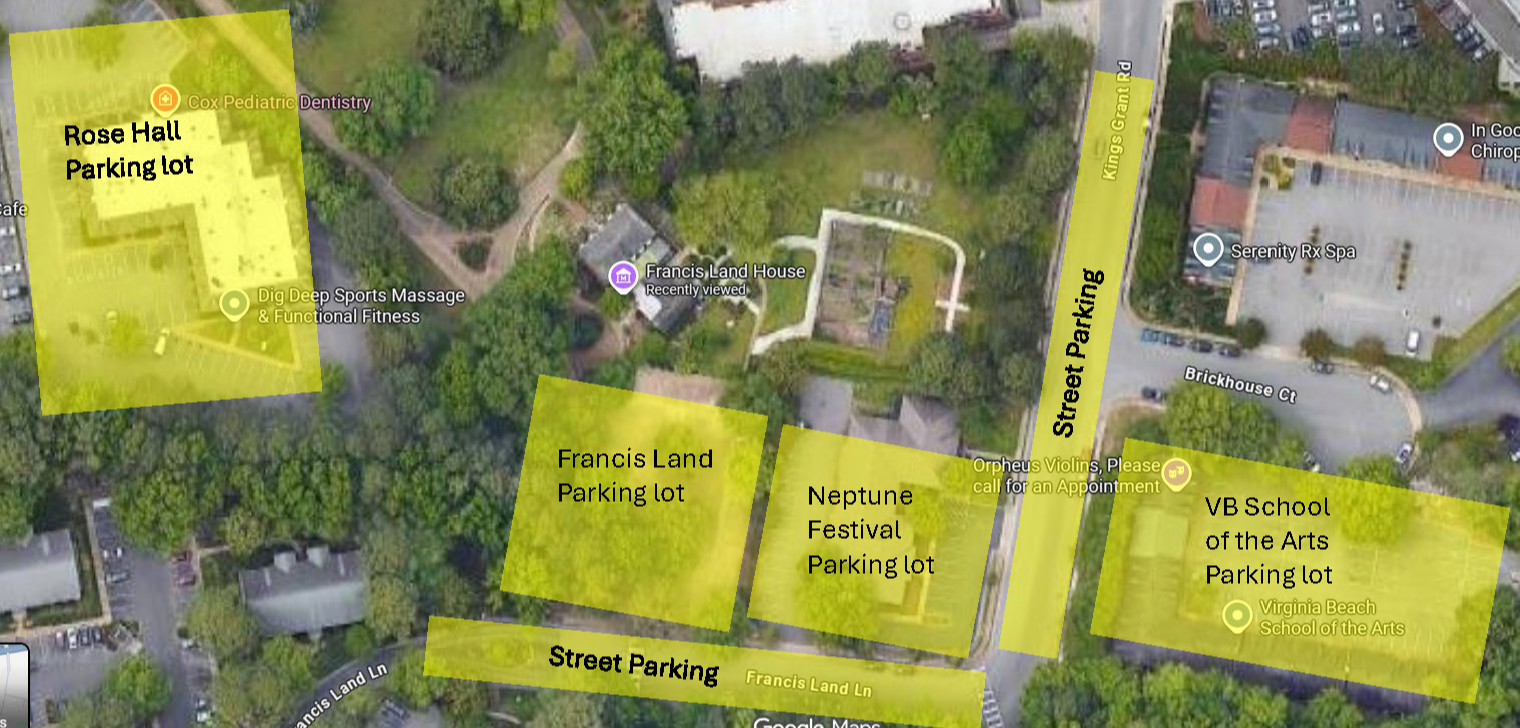
The map below outlines available parking lots and spaces available. Please refrain from use of any unmarked lots or spaces on the map below.
We’re honored by the response and grateful to share this work with our community. We’re honored by the response and grateful to share this work with our community.
Featured in the Historic Francis Land House
Inside a museum dedicated to the fight for freedom, the past refuses to stay behind glass.
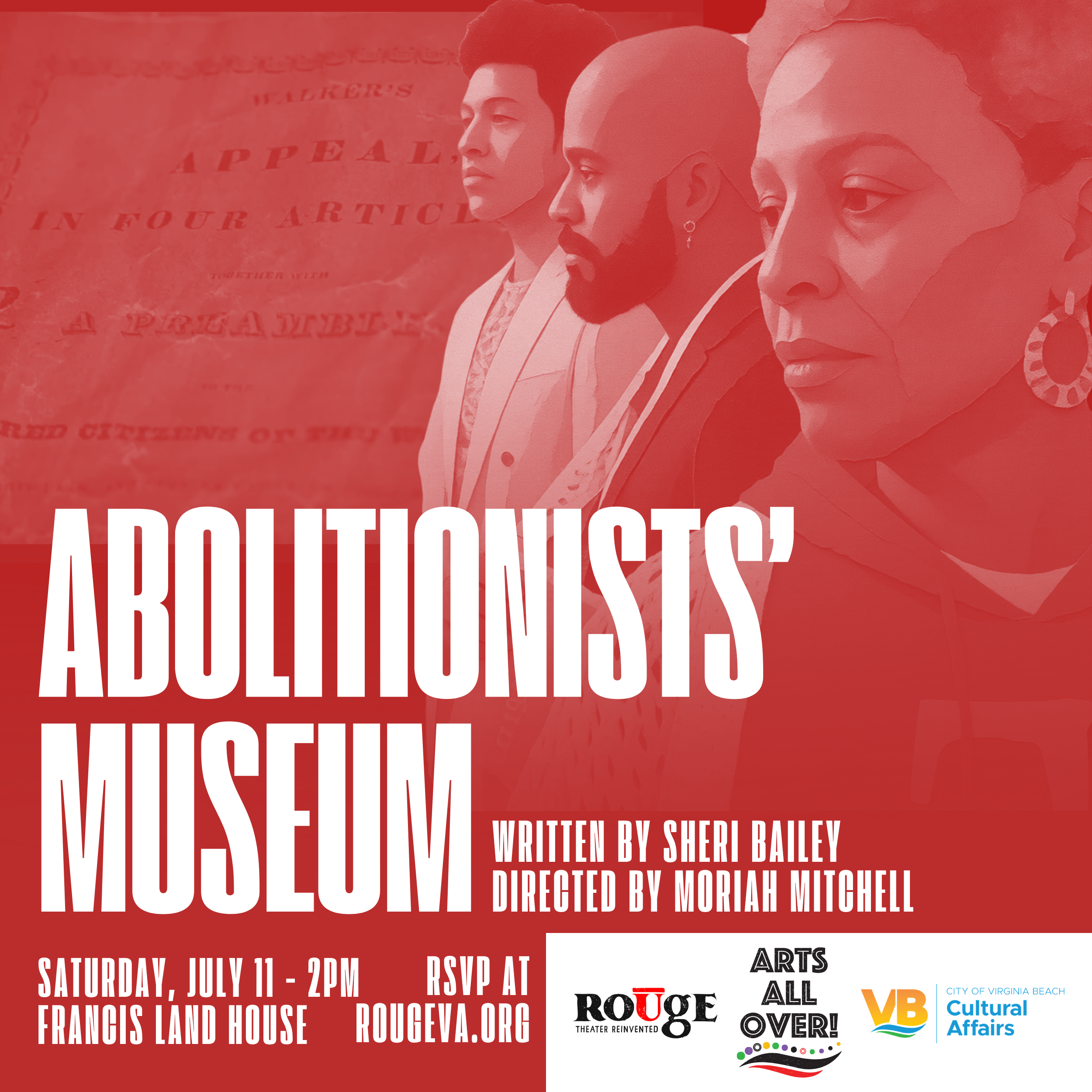
In Sheri Bailey’s thought-provoking play Abolitionists’ Museum, wax figures of some of history’s most influential abolitionists come to life when a Confederate flag is added to their display. What begins as a question of historical context quickly becomes a powerful debate over memory, symbolism, trauma, truth-telling, and the responsibility of how we represent the past.
Featuring figures such as Harriet Tubman, Sojourner Truth, Frederick Douglass, Nat Turner, John Brown, Harriet Beecher Stowe, David Walker, and Abraham Lincoln, the play invites audiences into a conversation that is as urgent today as it is rooted in history: How do we honor the struggle for liberation while confronting the symbols and systems that sought to deny it?
Presented as part of ROŪGE’s Arts All Over Series, Abolitionists’ Museum uses theatre as a space for reflection, dialogue, and community engagement. Bailey’s work challenges audiences not simply to observe history, but to reckon with the ways it continues to live among us.
-
Sheri Bailey is a playwright, activist, educator, and founder of the Juneteenth Festival Company. A graduate of the University of Pennsylvania who attended UCLA’s graduate playwriting program, Bailey has written more than twenty plays spanning comedy, drama, and history. Her work, including Abolitionists’ Museum, often uses theatre as a space for racial healing, historical reflection, and community dialogue.
-
Description text goes here
-
The Francis Land House is a historic house museum in Virginia Beach, built circa 1805 and once surrounded by hundreds of acres of farmland. Formerly the home of Francis Land VI, a prominent Princess Anne County plantation owner, the house is now operated by Virginia Beach History Museums. Through period furnishings, preserved grounds, and guided tours, the site explores early 19th-century life, Federal-style interiors, plantation history, and the stories of both free and enslaved people connected to the property.